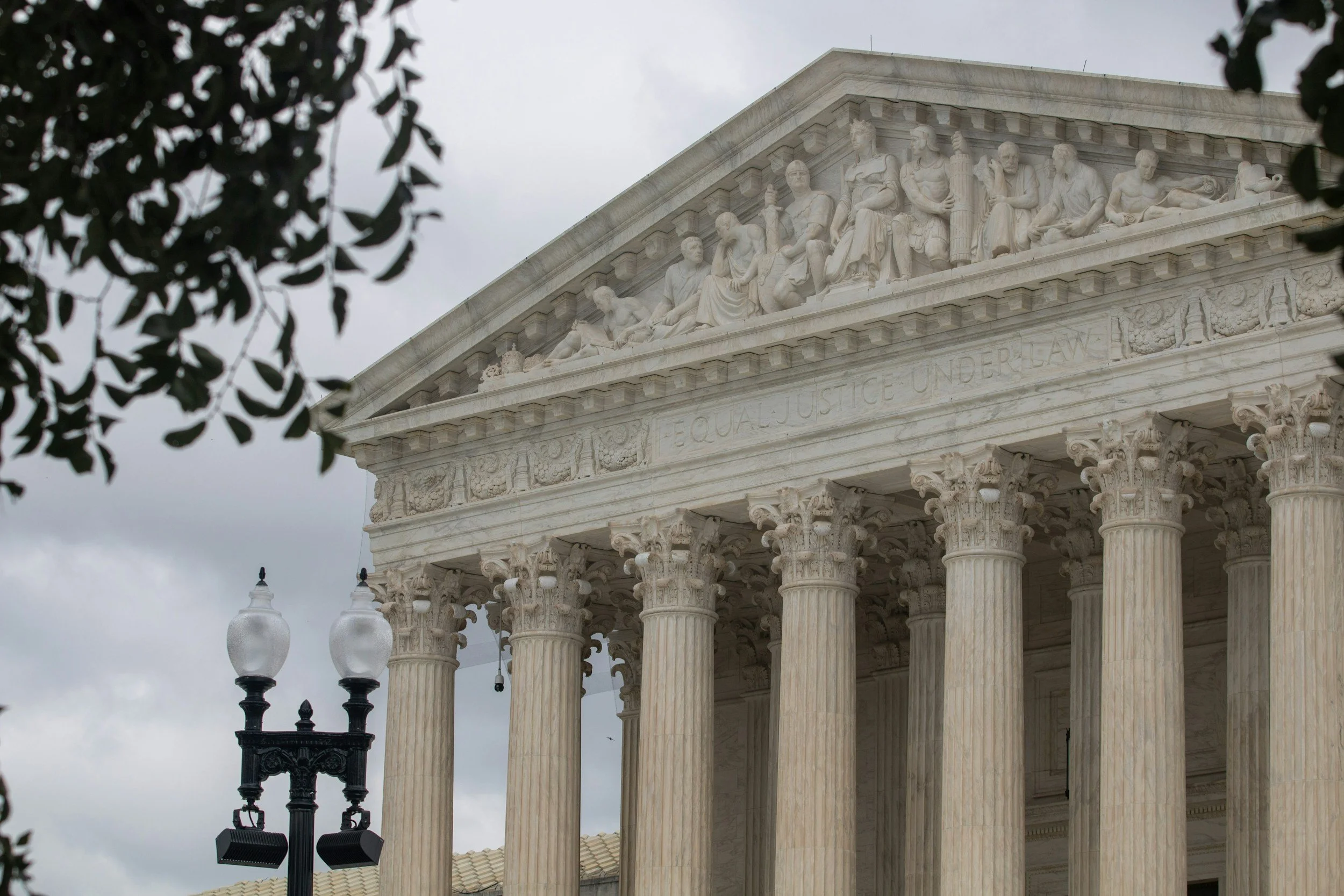
Received a Federal Grand Jury Subpoena?
A federal grand jury subpoena is a court order. It requires you to testify, produce documents, or both. Federal prosecutors use subpoenas in investigations and leading up to pursuing criminal charges. A grand jury subpoena does not mean you have been charged with a crime or that you are even a suspect. But what you say, what you hand over, and how you respond is very important.
By working with an attorney, you can inquire with the government about their interest and sometimes negotiate being released from the subpoena in lieu of a document production or less formal interview.
What does a federal grand jury subpoena look like?
Most federal grand jury subpoenas use a standard court form, AO 110. It names the person summoned, the courthouse, and the date and time to appear. It lists any documents or records you must bring. It is signed by the Clerk of Court, and at the bottom it names the Assistant U.S. Attorney who requested it. That prosecutor’s name and phone number tell you who is running the investigation. Do not call that number yourself. Give it to your lawyer.
What kinds of grand jury subpoenas are there?
There are two. A subpoena ad testificandum requires you to appear and testify. A subpoena duces tecum requires you to produce documents, records, devices, or other items. Some subpoenas require both. A documents-only subpoena can often be satisfied by producing records through counsel, without anyone appearing in the grand jury room.
Some people call it a grand jury summons
A subpoena to testify before a grand jury is sometimes called a grand jury summons. The court form is a subpoena, and the obligations it creates are the same either way.

Your obligations
Do I have to comply with a grand jury subpoena?
Yes, unless a court excuses you. A grand jury subpoena carries the authority of the federal court. Ignoring it can lead to a contempt finding, and a witness held in civil contempt can be jailed until they comply, for as long as the grand jury sits (up to 18 months). That said, “comply” does not always mean “answer every question” or “hand over everything.” You keep your constitutional rights and legal privileges. A lawyer can also challenge a subpoena that is unreasonable or oppressive.
What if the date on the subpoena doesn’t work?
Do not simply skip it. Prosecutors routinely agree to new dates, especially when a lawyer asks. Your lawyer can also negotiate the scope of a document request, the format of production, and a reasonable timeline.
Can I talk to the agents who served the subpoena?
You are not required to. Agents often serve a subpoena and then ask a few “quick questions.” Anything you say can be used, and a false statement to a federal agent is a separate federal crime, even if it is unsworn. Politely take the subpoena, decline to answer questions, and call a lawyer.
Can I destroy or change documents now that I know about the investigation?
No. Destroying, altering, or hiding records or devices after you learn of a grand jury investigation can be charged as obstruction of justice. That includes deleting texts, emails, and social media. It is often a more serious problem than whatever the grand jury was investigating in the first place. Preserve everything and let your lawyer decide what must be produced.
Your rights
Am I a target, a subject, or a witness?
The Department of Justice uses three labels. A target is someone prosecutors have substantial evidence linking to a crime and view as a likely defendant. A subject is someone whose conduct falls within the scope of the investigation. A witness is someone believed to have relevant information. These labels can change as an investigation develops. A lawyer can often ask the prosecutor directly which category you fall into, and the answer shapes every decision that follows.
Can my lawyer come into the grand jury room with me?
No. Federal rules do not allow a witness’s lawyer inside the grand jury room. But your lawyer can wait directly outside, and you may ask to step out to consult with your lawyer, typically after any question. Preparing in advance, and knowing you can step out, is one of the most important protections you have.
Do I have a right to remain silent?
Yes. The Fifth Amendment protects you from being compelled to be a witness against yourself, and that protection applies in the grand jury. You may decline to answer a question if a truthful answer could tend to incriminate you.
Will I get Miranda warnings?
Not necessarily. Miranda warnings are a protection for custodial police questioning, and courts have not required them in the grand jury. Federal prosecutors have an internal policy of advising targets of their rights, but you should not expect a warning if you are not under arrest.
Is what happens in the grand jury secret? Can I talk about it?
The grand jurors, prosecutors, and court reporter must keep grand jury matters secret. Witnesses generally are not bound by that secrecy rule in federal court. You may tell your lawyer what happened, and you usually may discuss your own testimony with others. But talking about it can carry real risks, including claims of witness tampering or obstruction. Speak with your lawyer before discussing your testimony with anyone else, especially anyone else involved in the investigation.
Do privileges still apply?
Yes. The attorney-client privilege, the spousal privileges, and other recognized privileges apply in the grand jury. A lawyer can identify privileged material before anything is produced and assert the privilege on your behalf.
When do you take the Fifth?
Can an innocent person take the Fifth?
Yes. The Supreme Court has recognized that the privilege protects the innocent as well as the guilty. Honest people can be swept into an investigation by ambiguous facts. A truthful answer can supply a link in a chain of evidence the government uses against you, even if you did nothing wrong. Invoking the Fifth is not an admission of guilt, and grand jurors are not supposed to treat it as one.
When is it appropriate to invoke the privilege?
When you have a reasonable basis to fear that a truthful answer could be used against you in a criminal case, or could lead to evidence that would be. The danger must be real, not imaginary, but it need not be certain. This is a judgment call that depends on what the government already knows, your role, and where the investigation is heading. It should be made with a lawyer, before you testify, not alone in the grand jury room.
Can I just refuse to testify at all?
Usually not. In general, a witness must appear and invoke the privilege question by question. A blanket refusal may not be enough. There is an important exception in practice: if you are a target and your lawyer tells the prosecutor in writing that you will invoke the Fifth, Justice Department policy generally discourages forcing you to appear just to invoke it. Your lawyer can request that you be excused.
Can I answer some questions and refuse others?
Sometimes, but this is where witnesses get hurt. If you testify about incriminating facts, a court may find you waived the privilege as to the details of those facts. Answering “just the easy questions” can open the door to the hard ones. Decide on a strategy with your lawyer before you go in.
Does the Fifth Amendment protect my documents?
Partly. These rules are technical and worth careful analysis before anything is produced. The contents of ordinary business records you created voluntarily usually are not protected. But the act of producing documents can be testimonial in certain circumstances. Corporations, LLCs, and other entities have no Fifth Amendment privilege, and a custodian generally must produce entity records.
What happens if I lie?
Lying to a grand jury is perjury, a federal felony. It is one of the easiest charges for the government to prove because there is a transcript. Some people who were never charged with the underlying conduct under investigation have been charged with perjury or obstruction. If the truth would hurt you, the answer is to invoke the privilege, not to shade the truth.
How working with Alison Tex Clark protects you
Alison Tex Clark has defended people in federal criminal investigations for more than two decades, including as a senior litigator with the Federal Public Defender for the District of Oregon. Her office is one block from Portland’s federal courthouse. When a grand jury subpoena arrives, she typically:
Becomes your single point of contact. Agents and prosecutors talk to her, not you. That stops informal interviews before they happen.
Finds out where you stand. She contacts the prosecutor to learn, as far as the government will say, whether you are a target, subject, or witness, and what the investigation concerns.
Reviews the subpoena for defects. She evaluates whether it is overbroad, unreasonable, or oppressive, and whether it reaches privileged material. Where warranted, she negotiates narrower terms or moves to quash or modify it.
Controls document production. She preserves your records, screens them for privilege, and evaluates whether the act of production is protected. Production is made through counsel, with a record of exactly what was provided.
Advises on the Fifth Amendment. She analyzes your exposure before you testify and decides with you whether to invoke the privilege, on which subjects, and how to avoid an accidental waiver.
Negotiates on your behalf. Depending on your situation, that may mean seeking a document-only production, an interview in place of testimony, a letter excusing a target from appearing, or written assurances. Any immunity or proffer agreement is reviewed line by line before you sign it.
Prepares you to testify. If you testify, you will know the likely subject areas, how the room works, how to answer only the question asked, and when to ask to step out.
Waits outside the door. She is present at the courthouse during your appearance and available whenever you step out to consult.
Plans for what comes next. A subpoena can be an early sign of charges. She positions you for the best available outcome, whether that is closing your involvement, cooperation on fair terms, or a strong defense.
Talk to a lawyer before you respond
If you or your company has received a federal grand jury subpoena or a target letter in Oregon, contact Alison Tex Clark for a free, confidential consultation. Bring the subpoena and any letters or business cards the agents gave you.
Defender Clark LLC · Alison Tex Clark, Attorney at Law · 333 SW Taylor St. #300, Portland, OR 97204 · tex@defenderclark.com